Your first gravel bike. How to choose one?
Choose for a typical ride and the hardest stretch you encounter regularly. On a test ride, check your position, lowest gear and room for tyres and the equipment you actually need.
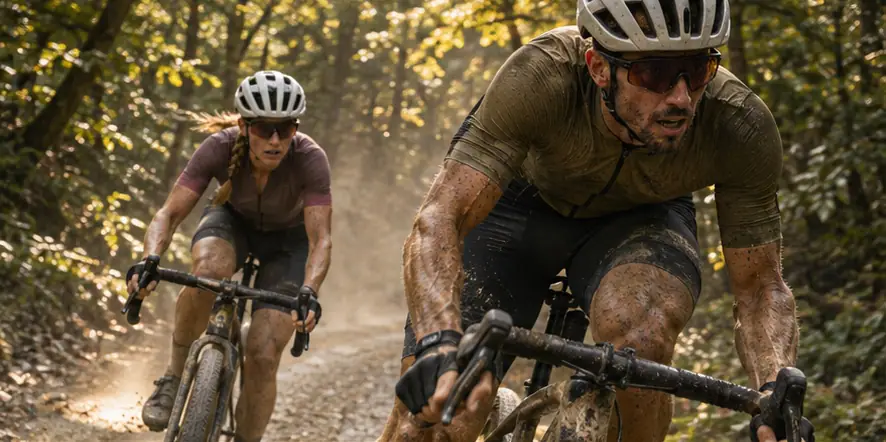
Describe your usual route
Record the distance, the longest climb, the surfaces and whether you carry luggage. The word gravel could mean packed forest road, loose stones or muddy ruts. On mostly paved rides a comfortable road position and well-spaced gears may matter most. If your usual loop includes a steep forest climb with bags, check your low gear and traction there.
Try neighbouring sizes
Use the size chart to shortlist bikes. If you sit between sizes, ask the shop to set a comparable saddle height on both and ride the same loop. Check your reach to the brake levers on the hoods and in the drops, and whether you can look over a shoulder without tugging the bars. A stem or lever adjustment can refine the fit once the frame size works. Compare models individually even if their size labels match.
Calculate the easiest gear
Divide the teeth on the smallest front ring by those on the largest rear sprocket. With the same wheel size, the lower ratio makes climbing easier at the same speed. A 40/42 combination is about 0.95, while 30/36 is about 0.83. On faster rides look at the steps between gears as well. Try the easiest gear on a representative climb and account for your luggage.
Check tyres and mounts together
Get the frame and fork clearance for your size and confirm the limit with mudguards fitted. A nominal tyre size can measure differently on a different rim. Check rim and tyre compatibility and ask which mounts exist on your size. If you expect to ride in mud, have the shop confirm clearance for the exact setup.
Use the same test loop
Include pavement, rough ground, a short climb and several stops. Test both hand positions and normal shifting, then note which bike needed fewer corrections. Add the price of the luggage hardware, tyres or gearing you would change immediately. Compare that total with a bike that already meets your needs.
Decide which trade-off matters
For commuting and dry gravel, look at reach and road cadence. For long rough rides with luggage, check the lowest gear under load and room for the tyre you want. If one model has better gearing but the position is poor, try another size or another model before buying.
Comments (0)
Comments appear after a moderator approves them.